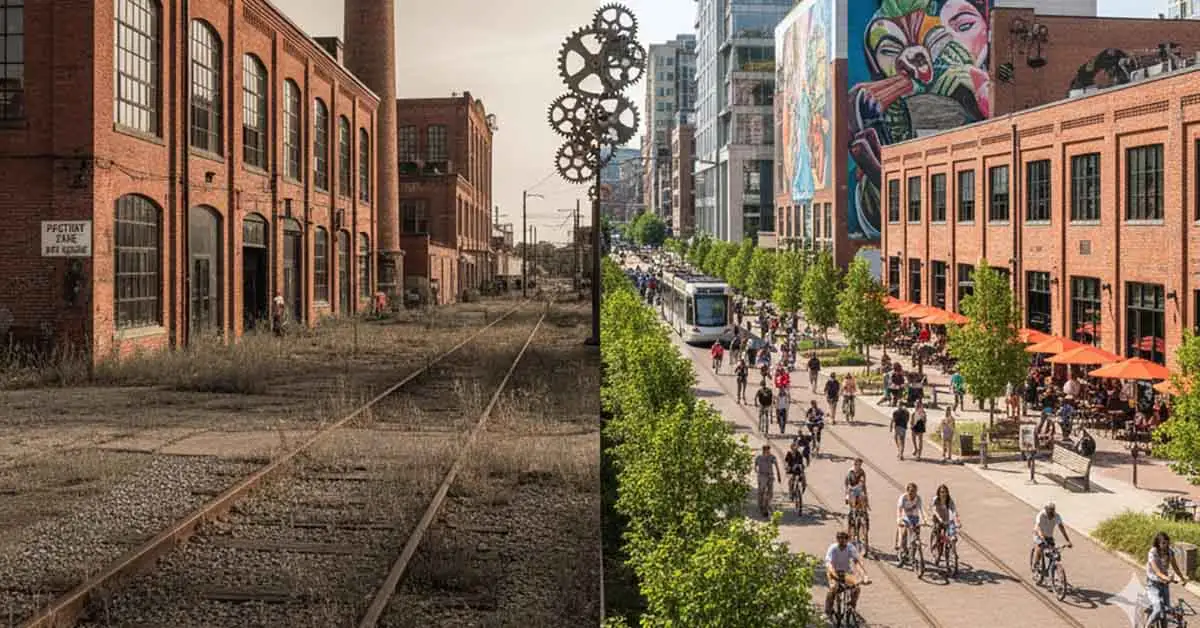
The rapid development of many urban regions throughout the United States is a hallmark of the 21st century, and only a handful of places can demonstrate this more clearly than the “Westside” districts in major cities. The once sprawling industrial zones were dominated by massive railway lines, factories, and abandoned warehouses. The industrial areas have seen a dramatic transformation into lively hubs for business, innovation, and luxury living. This transformation is a blueprint for modern urban renewal caused by the convergence of changes in the economy, demographic trends, and strategic real estate.
From Grit to Glamour: The Industrial Past
In the past, the Westside of the majority of cities – often located close to ports, rivers, or rail yards that were major- was the main operational hub of the city, encompassing manufacturing, logistics, and distribution.
- Declination: Starting in the late 20th century, the rise of globalization and a shift towards suburban industrial parks caused the closure of these parks and left behind blocks of brownfields and architectural ruins.
- The appeal of Space: These former industrial structures, which were distinguished by their high ceilings, huge windows, and strong frames for structural support, provided large, movable floor plates. These characteristics proved attractive to the upcoming generation of urban tenants: technological startup companies, creative agencies, and design companies.
The Pillars of Rebirth
“Westside Boom” wasn’t a random event. It was caused by certain factors that combined to provide fertile soil to redevelop:
1. The Lure of Creative Class Tenants
The spark was initially sparked by businesses seeking authenticity, personality, and a less corporate vibe rather than the traditional high-rises of downtown. The open, industrial design was perfect for the collaborative spirit of the media and technology industries. The size of the warehouses of the past allowed for campuses that attracted and retained new talent.
2. Strategic Infrastructure Repurposing
The key to the Westside’s popularity is the reuse of infrastructure that was abandoned:
- Rail-to-Trail, the conversion of former railway tracks (like those of the High Line in NYC or the BeltLine in Atlanta) into bicycle and pedestrian routes, has drastically increased the connectivity of properties and property values and transformed isolated areas into social and linear parks.
- Transportation Access The renewed investment made in public transportation, usually by extending light rail and buses, rapid transit (BRT) routes into these areas, made them accessible to a broader urban population.
3. Mixed-Use Zoning and Density
Local governments frequently helped in the growth by implementing mixed-use zoning. This allowed developers to develop zones in which people could reside, work, or shop without the need for cars. The high-density residential structures, such as boutique hotels and chef-driven restaurants, were seamlessly integrated into the new landscape of business, creating a more hospitable atmosphere.
The Challenges of Evolution
Although the process is generally described as a success, it also poses significant urban problems:
- Affordability Crisis The soaring demand from wealthy residents and businesses typically results in rapid urbanization and displacement of long-time, low-income residents, as well as small non-industrial companies that are unable to pay the soaring rents.
- Loss of Authenticity. Some critics argue that the rapid and uniform growth can make the region homogeneous and remove the industrial “grit” and the history that initially made it attractive.
Despite these challenges, the Westside model–a combination of historical preservation, contemporary technology, and design-driven economy remains an influential force in urban growth, proving that a city’s abandoned industrial past could become the basis of the most exciting business prospects.
Latest Posts

OPEC Fund to Co-Finance $2 Billion for Africa’s Development
The OPEC Fund for International Development (OFID) has announced plans to co-finance as much as 2 billion dollars in order to accelerate the development of infrastructure and growth in Africa. This important initiative for development will concentrate on access to energy as well as food security and…