

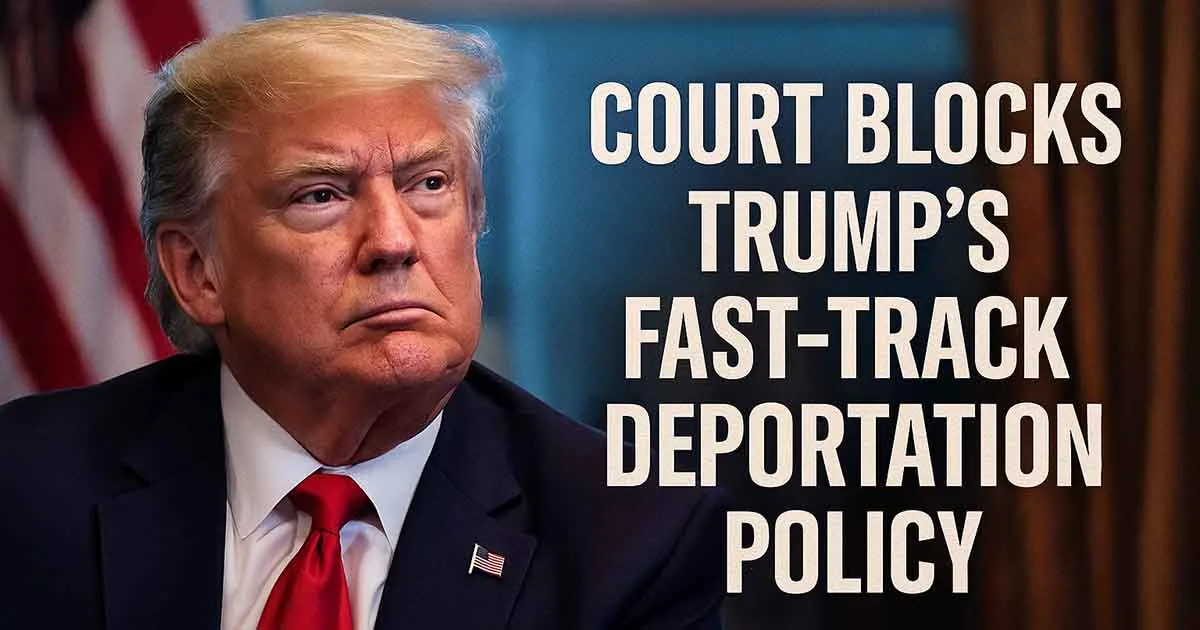
A significant immigration ruling has shaken U.S. politics in recent hours, following an appeals court at the federal level stopping the Trump administration’s plan to extend the speed-track process for deportation across the country. The ruling of the court is a major setback to the administration’s ad hoc immigration policy that has led to new debates over due-process rights and executive authority.
The policy that was halted was designed to facilitate the swift removal of immigrants without documents anywhere in the United States, not only near the border, without the need for a hearing in a court. Some critics argued that this expansion could put thousands of people at risk of deportation without due process and would be particularly detrimental to long-time residents who are not able to prove their citizenship quickly.
In a ruling of 2-1, the appeals court was in agreement with the concerns. Judges pointed out the lack of adequate legal protections and the possibility of improper expulsions. The ruling is in line with earlier decisions of an earlier court, which also cautioned that the expansion could violate constitutional safeguards.
The decision is a political one. Immigration is one of the most divisive issues in American politics. This ruling is a fresh topic that both sides can use. Republicans claim that deportation on a fast track is vital for border control to ensure national security. Democrats oppose the idea, arguing that it is a violation of fundamental rights and circumvents the legal procedure.
In the eyes of the Trump administration, the decision is a major obstacle. The policy was part of a larger immigration crackdown that was designed to accelerate removals and reduce legal appeals. After the appeals court refused to let the expansion proceed, the administration is now required to think about the next steps, including a request to appeal to the Supreme Court.
Immigrant rights groups have declared the ruling to be an important victory. They say that extending speedy removal across the country would cause fear of immigrants in their communities and could lead to a flurry of civil rights violations.
In terms of politics, the ruling could impact the political landscape in the coming election cycle. It can energize immigration advocates, create the rhetorical points of candidates, and demonstrate the role of the judiciary to check executive power.
The legal battle is still ongoing. This decision highlights an important tension that is a central issue in U.S. immigration policy–balancing enforcement with constitutional safeguards.
Court Blocks Trump’s Expanded Fast-Track Deportation Policy











Leave a Reply