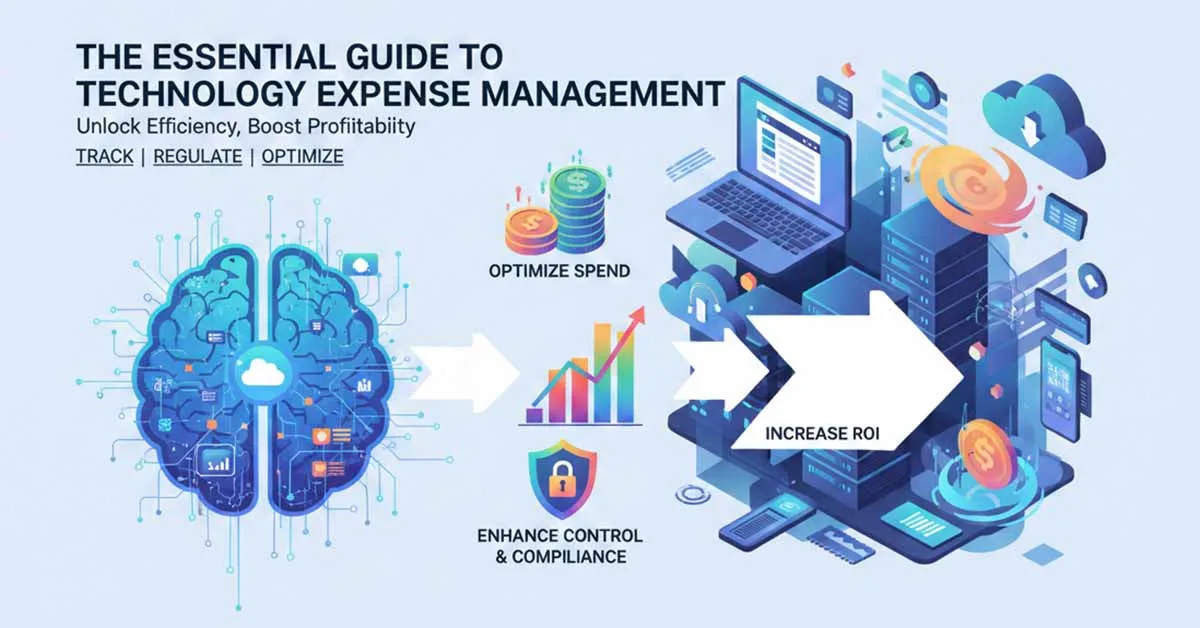
In a time of digital transformation, businesses are investing in technology devices, tools, software, and cloud-based services to remain ahead of the competition. But with more investment comes more complexity in tracking, regulating, and optimizing the expenditures. This is the point at which technology-based cost management is not only useful but vital.
In this thorough guide, we’ll look at the basics of what technology expense management is, and why it’s crucial, the best strategies for success, the most common mistakes, and tools that will aid you in managing the costs of technology and achieving higher ROI.
What Is Technology Expense Management?
Technology cost control (TEM) is the systematic method of tracking, monitoring, and optimizing the totality of technology-related expenditure within a company. This covers everything from software licenses to cloud subscriptions, to hardware purchases and mobile devices, as well as telecommunications and IT services.
A well-thought-out TEM strategy will ensure that companies:
- Be aware of the purpose of their money.
- Eliminate unnecessary expenditure
- Enhance forecasting and budgeting.
- Improve alignment between the goals of the business and technology.
Without a systematic approach to managing technology expenditures, companies are at risk of excessive spending, inadequate utilization of their assets, contract leakage, and budget deficits.
Why Technology Expense Management Matters Now More Than Ever
Today, the business environment is more connected than ever. According to Gartner estimates, total IT spending is expected to exceed $4 trillion. Companies spend a large share of their budgets on cloud and software solutions. Manual management of these costs is no longer feasible. Too many factors make it complex, fast-moving, and expensive.
Here’s the reason why the management of technology expenses is a must for any organization:
Rapid Growth of SaaS and Subscription Services
Many companies have shifted to Software-as-a-Service (SaaS) models, meaning recurring subscription costs. Without TEM procedures, companies often do not keep track of active subscriptions and end up with inefficient tools and excessive expenditure.
Remote and Hybrid Work Models
In this age of remote working, employees use various devices, apps, and cloud-based platforms. This creates tracking usage data and the associated costs, a problem — a problem that cost management for technology was specifically developed to address.
Pressure on Budgets and ROI
With uncertain macroeconomic conditions, business leaders want every technology dollar to achieve tangible results. TEM brings transparency and accountability to technology investment decisions.
Compliance and Risk Management
The regulations, such as GDPR and HIPAA, oblige companies to understand the location of their data. Technology expense management assists in ensuring compliance by making sure that assets and services are tracked and auditable.
Key Components of Technology Expense Management
Effective cost management for technology is built around several key pillars. Let’s take a look at each and learn how it affects operational and financial control.
1. Inventory and Discovery
You cannot control what you cannot see.
A fundamental step in TEM is to create a complete inventory of all assets in technology that include devices as well as cloud services, software licenses as well and vendor contracts. This inventory can help organizations map their spending habits and determine areas where they are at risk.
2. Usage Monitoring
Knowing what you have is just one aspect — knowing how it’s used as much.
Utilization monitoring tools can help you detect licenses that aren’t being used, as well as idle cloud resources and accounts that are not being used. In identifying wasteful accounts, businesses can reduce unnecessary expenses and allocate resources to teams that truly require them.
3. Cost Allocation and Chargeback
After you have tracked use, you can allocate expenses to certain groups or business units. This method promotes accountability and helps departments manage their own IT costs in a responsible way.
For instance, a marketing team that is who is a member of multiple analytics platforms could be reimbursed for their software based on the amount of use, instead of paying for it centrally.
4. Contract and Vendor Management
Contracts can hide huge savings opportunities.
With technology-based expense management, organisations can keep track of renewal dates, measure pricing against industry standards, and negotiate more favorable conditions. Being aware of contract expirations can also help avoid auto-renewals and surprises.
5. Automation and Workflow Integration
Many companies depend on spreadsheets that are manual or unconnected tools, which can lead to mistakes and inefficiencies.
Automating processes such as invoice ingestion workflows for approval, invoice ingestion, and renewal notifications boosts the accuracy of processes and frees time to make strategic decisions.
Actionable Strategies to Improve Technology Expense Management
Implementing the technology-based expense management efficiently requires a strategic approach to planning and implementation. Here are some practical strategies that you can implement now:
Start With an Audit
An in-depth audit will show the places where the money you spend on technology is going and also where it’s wasted.
Begin by collecting data from IT, finance, and HR, as well as procurement. Find:
- All vendor invoices
- Active SaaS subscriptions
- Mobile assets and hardware
- Cloud service bills
- Contract renewal dates
This audit will serve as a baseline to improve.
Establish Clear Policies
Affordable TEM requires clear guidelines that define:
- Procurement processes
- Approval levels
- Software to board and deboard
- Procedures for cancellation and renewal
Make sure employees are aware of these policies and incorporate them into onboarding procedures for new employees.
Set Measurable KPIs
To see whether those TEM initiatives are delivering, make sure you have specific performance indicators like:
- Cost savings from tools that are deactivated
- Reduced the percentage of SaaS waste
- Automated time saving
- Vendor pricing improvements
The tracking of these KPIs will ensure the TEM initiatives are producing tangible results.
Foster Cross-Functional Collaboration
The TEM function isn’t just limited to IT. It affects the operations, finance, and every other unit of business that uses technology.
Create cross-functional teams that collaborate on budget planning and forecasting, usage reviews, and negotiations with vendors. This ensures the alignment of and ownership shared by all for the costs of technology.
Embrace Automation Tools
Investing in automation tools created specifically for TEM increases efficiency and the ability to scale. These tools can identify assets, classify expenses, manage contracts, and offer central dashboards to help you see.
A variety of tools, such as Flexera, Zylo as well and Vantage, have robust features to help with SaaS control and optimization of costs. You can look into more options on sites that review software, such as Gartner or Capterra, to find the most appropriate software for your business.
External link example: For software comparison, see the SaaS management category on Capterra.
https://www.capterra.com/sem-software/
Common Challenges in Technology Expense Management — and How to Overcome Them
Even the most well-meaning organizations have challenges in implementing TEM. Here are a few of the most common problems and solutions that are practical.
Lack of Ownership
When there is no consensus on who owns spending on technology, it leads to uncoordinated buying and waste of money.
Solutions: Appoint a TEM leader or team that is responsible for monitoring expenditures and enforcing the policies.
Fragmented Data Sources
If IT, finance, and operations keep data in silos, it’s difficult to gather an entire picture of your spending.
Solution centralizes information using a TEM platform or integrates systems using APIs to integrate usage, billing data, and contract information.
Hidden Cloud Costs
Cloud-based bills are notoriously obscure, with unpredictability in use spikes that could result in unexpected expense.
Solution: Use cloud cost management tools (e.g., AWS Cost Explorer, Google Cloud Billing reports, Azure Cost Management) to evaluate and estimate cloud usage and spending.
External reference: Each major cloud provider offers native cost management tools to help organizations optimize cloud spend.
https://aws.amazon.com/aws-cost-management/
The Role of TEM in Digital Transformation
As businesses accelerate their technological transformations, the amount and range of tools for technology grow. Without the ability to manage technology expenses, digital initiatives could turn out to be expensive and inefficient.
TEM supports digital transformation by:
- Prioritizing investments that create business value
- Eliminating redundant technology tools
- Aligning spending on technology with strategic objectives
- Continuous improvement via data-driven insights
In a variety of ways, cost management for technology is the financial foundation for the digital transformation and its success.
Case Study: A Mid-Sized Company That Saved Millions
Let’s take a look at an actual-world scenario (hypothetical but rooted in the common consequences) from TEM in action.
Business: TechDriven Solutions Industry: Professional Services Challenge: Unmanaged SaaS subscriptions, growing cloud costs, and outsourcing that is not centralized
Steps Taken:
- Complete Audit: We identified 180 active SaaS tools – 40% of them duplicated or unusable.
- Use Tracking: The system identified under-utilized licences and eliminated unnecessary waste.
- Negotiations on Contracts: Securing volume discounts and consolidating vendors.
- Automation Tools created a central platform for TEM.
Results:
- 25% decrease in the annual cost of technology
- 40% of software licenses are that were reallocated or reclaimed
- Accurate budgeting has been improved.
- Faster procurement workflows
This case study shows how technology-based control of expenses can provide tangible operational and financial benefits.
Choosing the Right Technology Expense Management Tools
The choice of the best tool is contingent on your business’s requirements as well as its size, complexity, and scale. These are the most important aspects to look at when you are evaluating TEM platforms:
Discovery and Inventory Capabilities
The tool should be able to automatically detect the technology assets in the cloud as well as on-premises environments.
Usage Tracking
Find granular usage statistics that show how frequently tools are utilized at the departmental and user levels.
Contract Management
Tracking of contracts, renewal alerts, and vendor scorecards are crucial features to ensure proactive management.
Reporting and Dashboards
Effective TEM tools can be customized to provide dashboards and reports that provide precise information to executives and business owners.
External reference: For a deeper guide on SaaS expense tracking tools, see this article on TechTarget.
https://www.techtarget.com/searchsoftwarequality/definition/SaaS-management
How Technology Expense Management Improves Financial Planning
A successful TEM strategy isn’t just about cutting costs; it also enhances your financial planning and forecasting process. Here’s how:
Better Budget Accuracy
If you know the present and future technology spending, it is possible to forecast your spending with certainty.
Controlled Spend Growth
Through reducing unnecessary waste, you can ensure that technology expenses increase with your business’s needs.
Clear Communication With Stakeholders
Integrated TEM reporting helps leaders and finance teams to make well-informed strategic decisions.
Data-Driven Decision Making
TEM platforms generate information that helps to identify trends, predict future expenses, and make better purchases.
Best Practices Checklist for Technology Expense Management
In the end, the key points: a useful checklist to help you build and sustain solid technology cost management:
Conduct a first audit of your technology expenses. Centralize your technology inventory. Track the actual usage of your technology, not only licenses that are owned. Establish guidelines for renewals and procurement. Define who is responsible for the TEM processes. Implement automated billing and reporting. Review contracts with vendors and chargeback departmental accounts for accountability KPIs and track outcomes. Always refine strategies based on the findings.
Conclusion: The Future of Technology Expense Management
Technology expense management has become an option — it’s a major advantage in an era where digital services are essential to a business’s success. When implementing solid TEM techniques, companies will be able to reduce their waste, increase the predictability of their finances, and ensure that they get the most for every technology dollar.
As the ecosystems of technology continue to expand, the significance of TEM will become increasingly important. No matter if you’re a tiny start-up or a major company, knowing and controlling your technology costs is crucial to sustaining growth.
Related Resources
If you’re interested in similar topics that can aid you in improving the effectiveness of your leadership and organizational efficiency, check out these sources:
Project Management Institute Membership Fee: Know the costs and benefits. Master Management in 2026: Proven Strategies Every USA Leader Needs
The Management Essentials of USA Leaders – Enhance leadership abilities in today’s high-pressure environment. Project Management Institute Membership Fee: A Complete Guide