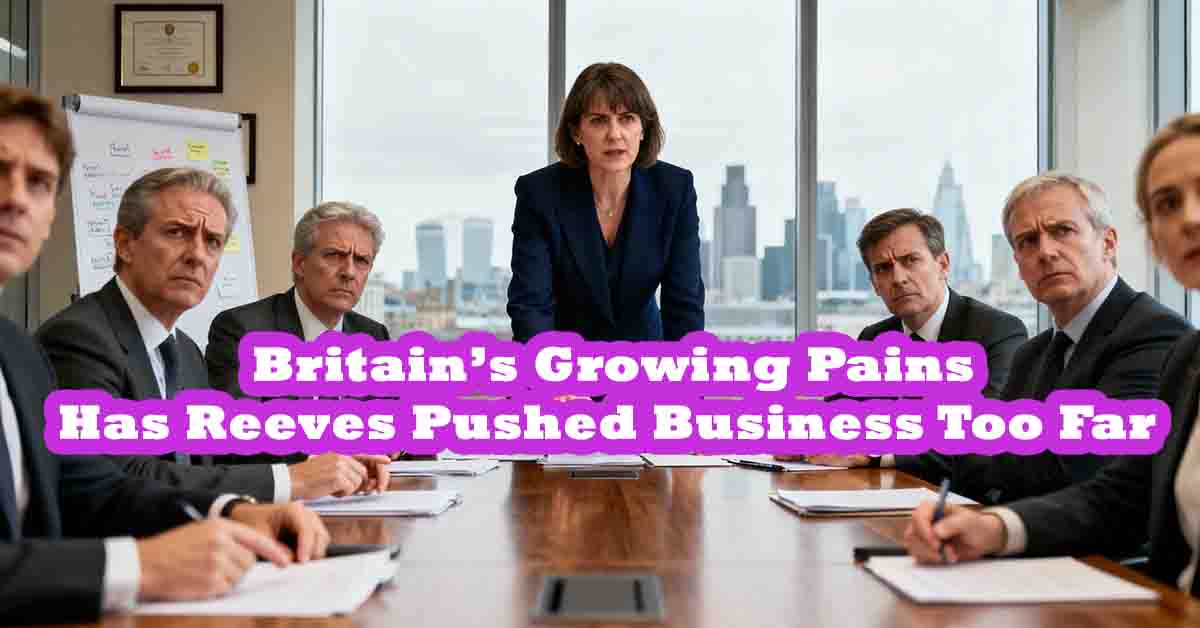
Rachel Reeves is under growing pressure from UK business leaders who claim that her tax-savvy policy has slowed growth at a time the economy needs investment. The initial optimism for a growth-oriented Labour government has diminished to be replaced by a growing sense that the country could be entering an unforgiving period of increased costs, low confidence, and insufficient expansion.
Taxes and business backlash
Jamie Nimmo has reported that the largest organizations and trade associations are shocked by the rash of cost and tax increases that came faster and swung harder than most were anticipating. Executives are unhappy that the repeated policy “surprises” regarding National Insurance and wage floors, and other levies, have undermined trust and made planning for the future more challenging.
The main issue is Reeves’s effort to improve the state’s finances while implementing welfare programs and an active industrial strategy. Her team is convinced that tough decisions are required to stabilize the economy, yet many business leaders believe that the burden falls more heavily on the investors and employers.
Investment squeeze and wage hikes
Businesses are now facing greater national insurance premiums from employers, along with a sharp increase in minimum wages, which is a double blow to industries that require a lot of labour, such as hospitality, retail, and social health. Retailers and companies that cater to consumers have warned that their margins are already decreasing, making it difficult to make decisions about the cost of jobs, wages, and prices in a time when consumers are facing stress.
Business groups have also said that the tax burden has caused companies to put off hiring, put off expansion projects, and, in a few cases, look at the possibility of transferring listings or operations to another country. Economic experts warn that this combination of tax burdens, weak growth, and a fragile economy makes the UK vulnerable if global economic conditions get worse.
Very high stakes for Reeves, along with the UK
Reeves believes that requiring more from wealthy households and businesses that are profitable today will provide better public services and a stable economy in the long run. She cites a cap on the corporate tax rate, a headline rate of zero, and specific incentives for entrepreneurs, as well as green investments, as evidence that the UK is still open for business.
Corporate leaders argue that, without a clearer and more dependable plan of action on taxes and regulations, Britain’s capital markets and its competitiveness will continue to fall behind in comparison to its global counterparts. The debate over “growing problems” is expected to determine what will be the future of policy that will shape employment, wages, and investment far beyond the current budget cycle.