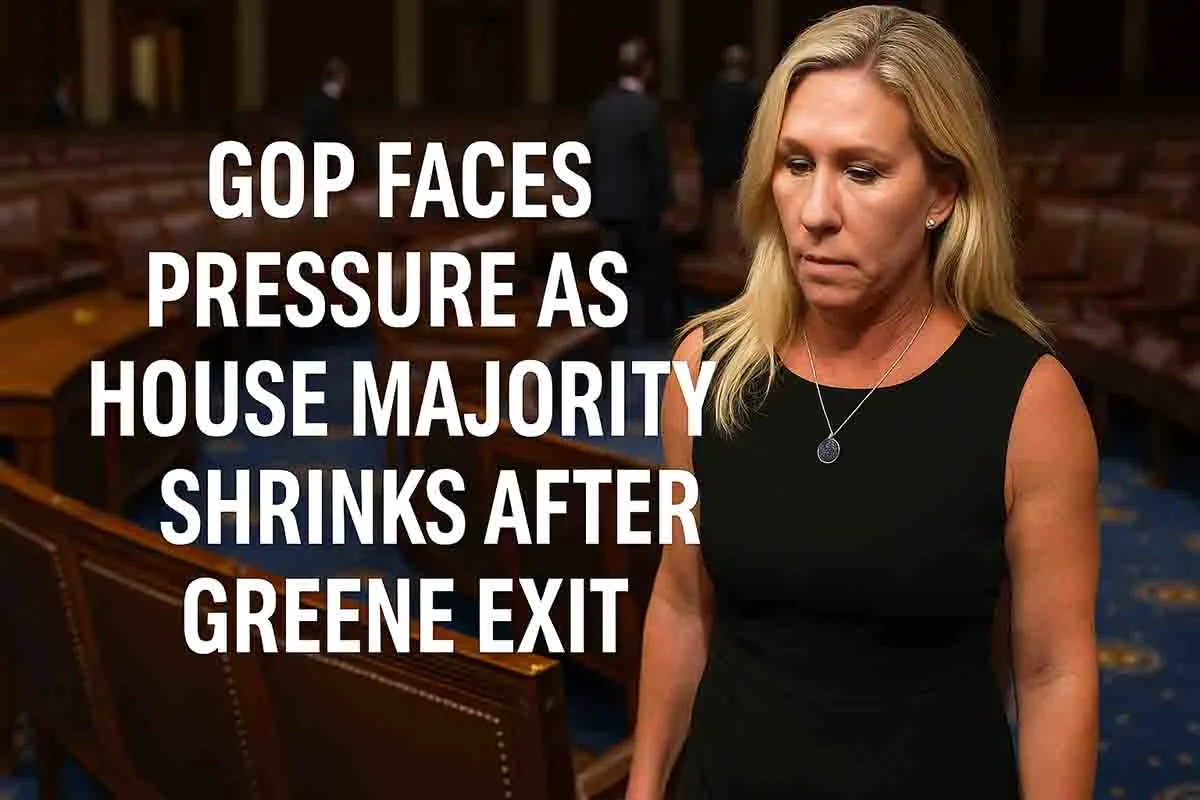
Marjorie Taylor Greene’s sudden departure has caused more than controversy in politics. It has also tightened the Republican Party’s already weakened majority in the U.S. House of Representatives. After her departure and her resignation, the GOP currently holds a slim 218-213 edge, a margin that is small enough to cause problems for almost every major vote in the legislature.
In the case of Republican direction, this change is a moment of uncertainty. Internal tensions, conflicting priorities, and the ongoing tensions among traditional conservatives as well as the MAGA faction have already made the task of governing difficult. Greene’s departure has added pressure in numbers, in addition to the ideological issues.
While Greene was a notorious figure due to her erratic stances and frequent clashes with the Republican Party, her presence was still regarded as a solid Republican decision-maker on numerous important issues. Without her, the margin of error shrinks to a razor’s edge. Any disagreement from moderates – or even a routine absence could stall major bills or even force the government to engage more closely with Democrats.
It is especially delicate. The GOP is working on multiple high-risk legislative proposals, including immigration legislation, as well as federal budget negotiations and changes to the regulatory system. A smaller majority reduces its power and makes the party susceptible to bargaining within the party.
Experts predict that this shift will need Republicans to unite more effectively than they did in previous years. With fewer votes, House leaders will need to keep their discipline in check, be aware of the differences between factions, and avoid public clashes that could undermine their negotiation influence.
Democrats, however, on the contrary, believe they have a chance. A more stifling GOP majority allows them to have more influence in close elections and gives them greater leverage in negotiations. Although a Greene-Greene district flip in an election special is not likely, the immediate impact on the legislative process is already felt.
Beyond the number of votes, Greene’s resignation exposes a deeper issue: the shifting nature of the Republican Party. Her departure could change the balance of power within the caucus, paving an avenue for fresh voices to help shape the direction of the party.
In the meantime, as the House adjusts to the new realities, the coming weeks will show how the GOP will be able to navigate the challenges of running a government with such a small margin and how well its internal unity will hold when under tension.
Latest Posts


OPEC Fund to Co-Finance $2 Billion for Africa’s Development
The OPEC Fund for International Development (OFID) has announced plans to co-finance as much as 2 billion dollars in order to accelerate the development of infrastructure and growth in Africa. This important initiative for development will concentrate on access to energy as well as food security and…