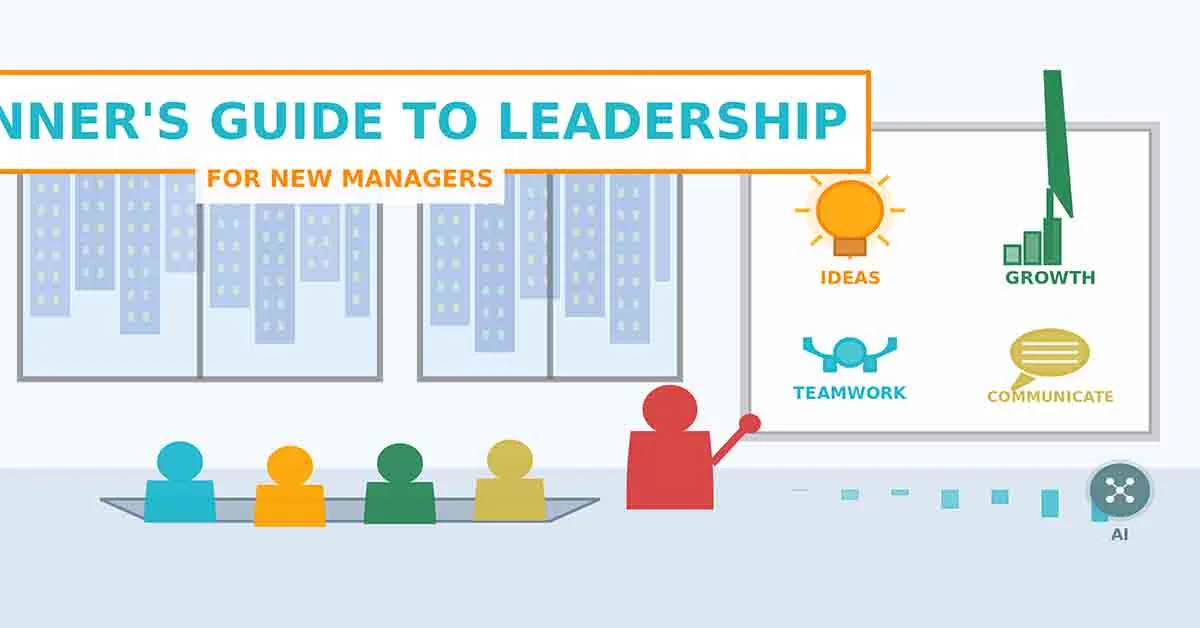
New managers often struggle to make the transition from an individual contributor to a leader. This beginner’s guide to leadership provides you with the practical abilities to inspire teams and generate results. Ideal for USA professionals who will be entering managerial roles in 2026.
Why Leadership Matters More Than Ever
Leadership can transform teams from average to top performers. In the current fast-paced USA business world, managers who have these abilities can increase their team’s productivity. This beginner’s manual for leadership simplifies the fundamentals of leadership without overwhelming.
Begin by understanding your job shift. Individual work is focused on specific things to do; leadership focuses on people and their vision. Gallup says that bad leadership costs businesses $1 trillion annually in turnover. Improve your confidence with daily practice.
The Leadership Mindset Shift
New managers must adopt a leadership mindset early. Eliminate the “doer” hat and adopt strategic thinking.
- Accept your vulnerability and admit the things you aren’t aware of.
- Prioritize the team’s wins, prioritizing team wins over individual glory.
- Make sure you focus on long-term growth, not quick solutions.
This boosts engagement by 15 This increase in engagement is 15 percent. Check out our beginners’ guide on leadership to gain more insight.
Core Traits Every Leader Needs
The best leaders have universal characteristics. Start developing these qualities as a novice.
Emotional Intelligence (EQ): Read emotions and then respond with empathy. The EQ component accounts for 58% of the job’s performance according to TalentSmart.
Determination: Make informed choices using available information. Indecision frustrates teams.
Integrity: Establish trust through consistently executing actions. Ethical leaders retain their talent three times longer.
Develop these through self-reflection journals. Keep track of your progress each week.
Mastering Delegation: Free Yourself to Lead
The delegation process separates leaders from managers. Young people are often overwhelmed, leading to burnout.
Step-by-Step Delegation:
- Team strengths to match tasks.
- Establish clear deadlines and expectations.
- Offer resources, and then take a step back.
- Feedback is the best way to follow up and not micromanage.
Teams delegated to other teams generate 30 percent more output. Start with tasks that are low risk. Take a look at our guidelines for team organization.
Building a High-Performing Team
Team members thrive when they have strong direction. Find people who fit the culture and potential.
| Team Building Phase | Key Actions | Expected Outcome |
|---|---|---|
| Forming | Icebreakers, role clarity | Trust foundation |
| Storming | Conflict resolution | Stronger bonds |
| Norming | Shared goals | Smooth collaboration |
| Performing | Autonomy with support | Peak productivity |
The model of Tuckman guides this procedure. Host monthly team gatherings.
Communication: The Leader’s Superpower
Communication issues can sink 70 percent of projects. Be aware of these key leadership skills.
- Active Listening Paraphrase to verify the understanding.
- Clear Messaging: Use simple language, avoid jargon.
- Feedback Loops • Provide precise, timely feedback.
Slack and other virtual tools can help facilitate the hybrid nature of communication. Make sure you have weekly meetings with a one-on-one person. Study the relationship between management and leadership.
Motivating Without Micromanaging
Motivation fuels performance. Personalize strategies for each individual.
Proven Tactics:
- Recognize wins publicly.
- Offer growth opportunities.
- Set goals that align with your personal objectives.
Motivational instillation is more durable than bonuses. Survey your team quarterly. Take a look at Gallup’s report on the state of global work.
Handling Tough Conversations
When conflicts arise, be prepared as the leader. Be prepared, and remain at peace.
Framework for Feedback:
- The state’s observations are not opinions.
- Impact of sharing on the team.
- Request their opinions.
- Co-create solutions.
This will solve 80% of problems on the first attempt. Role-play scenarios. Our DEI Implementation guide includes all-inclusive discussions.
Time Management for Busy Leaders
Managers who are new drown in meetings. Make your schedule more productive.
- Block focus time daily.
- Do not accept low-value requests.
- Use the Eisenhower Matrix for priorities.
The leaders who can manage their time effectively have a higher success rate of 22%. Tools such as Google Calendar help. Dive into SMART goal setting.
Decision-Making Under Pressure
Leapsmanship shines even in the uncertainty. Utilize structured strategies.
Simple Model:
- Gather data quickly.
- Be sure to weigh the pros and cons.
- Get the input of the key participants.
- Make a decision, and then talk to others.
Data-driven decisions succeed 6x more. Make mistakes and learn from them without blaming yourself. Reference Porter’Master Management in 2026: Proven Strategies Every USA Leader Needss Five Forces.
Developing Yourself as a Leader
Continuous learning is the hallmark of top managers. Spend 5 hours a week.
- Explore books such as “The Making of the Manager.”
- Join masterminds or seek mentors.
- Participate in webinars on platforms such as Coursera.
Coaches boost the growth rate by 5.2x. Keep track of your journals of leadership.
Common Beginner Mistakes to Avoid
Avoid these traps.
- The micromanagement of talented teams.
- Not taking care of your own growth.
- Inattention to the company’s culture.
The awareness of the company can prevent 90% of mistakes. Self-audit monthly.
Measuring Your Leadership Impact
Objectively keep track of progress.
Key Metrics:
- Team engagement scores.
- Project delivery rates.
- Percentages of retention.
Reviewing quarterly helps you make adjustments. Make small wins a point of celebration.
Leadership in Remote and Hybrid Worlds
2026 demands hybrid mastery. Foster connections virtually.
- Virtual team-building activities.
- Over-communicate asynchronously.
- Video can be used to add personalization.
Remote leaders retain 25% more talent. Adjust tools to meet the needs of remote leaders.
Scaling Your Leadership Skills
Develop from team leader to executive. Delegate leadership tasks.
Mentor high-potentials. Conduct cross-functional projects. Network via LinkedIn.
Action Plan: Start Leading Today
Use this guide for beginners to leadership immediately.
- Give one task to your team this week.
- Set up feedback sessions.
- Take a leadership chapter every day.
Consistency compounds results. Comment on progress.