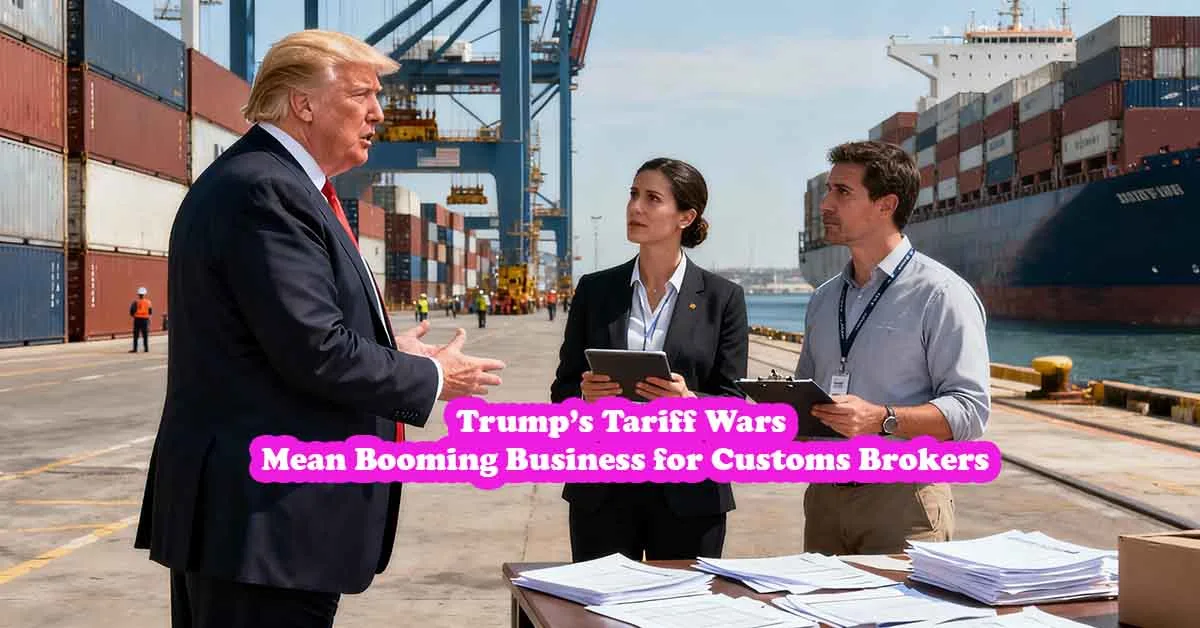
The effect of Trump’s trade wars and tariffs, and the customs brokers’ requirements, is evident all over the U.S. As the new tariffs, duties, and a shift in rules shape the world of trade, Customs brokers have become crucial for companies trying to navigate the complex import process. What was once an everyday filing task has evolved into a bustling, high-risk industry of service.
Importers today face rapidly evolving rules, complex classifications, and increasing pressure to comply. Many businesses rely on customs brokers to prevent costly errors that could cause delays, charges, or shipments that are misclassified. Every tariff announcement brings new uncertainty; the role of brokers has risen exponentially.
For readers seeking more insight into how tariff rules affect businesses, this page offers helpful context:
https://www.trade.gov/knowledge-product/us-tariffs-import-basics
Why Customs Brokers Are Suddenly in High Demand
The increase in demand is linked to a variety of major shifts triggered by the Trump tariff wars.
- More complex duties. New tariffs require importers to check codes, classifications, and country-of-origin regulations.
- More inspections at ports. Documentation mistakes result in delays, inspections, and even sanctions.
- Strategies to engineer tariffs. Brokers can now assist companies in redesigning or reclassifying products to legally lower charges.
- Expertise that saves money for many companies, working with a broker can be less expensive than putting your trust in an inaccurate classification.
As tensions between the two countries escalate, customs brokers are now”the first responders” for international shipping, helping to solve problems before ships even make it to the ports.
How the Tariff Wave Is Reshaping Trade
The shifts caused by Trump’s trade wars have a significant impact on the customs brokers’ business.
- Companies that specialize in customs and brokerage are increasing their teams, adding compliance experts and investing in new software to deal with the influx.
- Import-intensive industries like automotive parts, electronics, furniture, machinery, and other goods are heavily relying on brokers to keep up with the ever-changing rules.
- Many companies are looking to rethink supply chains completely, looking at alternative countries or altering production to compensate for tariffs.
For importers of small or mid-sized size, the task of negotiating tariffs by yourself is becoming almost impossible. A broker’s expertise can help save thousands of dollars and avoid delays of weeks.
What Businesses Should Watch Now
Variation in tariffs is expected to persist. This means that importers need to be alert and open. The most important steps are:
- In collaboration with expert customs brokers.
- Update supply chain strategies to minimize exposure to tariffs.
- Re-reading product classifications often.
- Building extra time into shipping schedules.
Customs brokers aren’t an option for back-office use -they’re a primary requirement in today’s business environment.