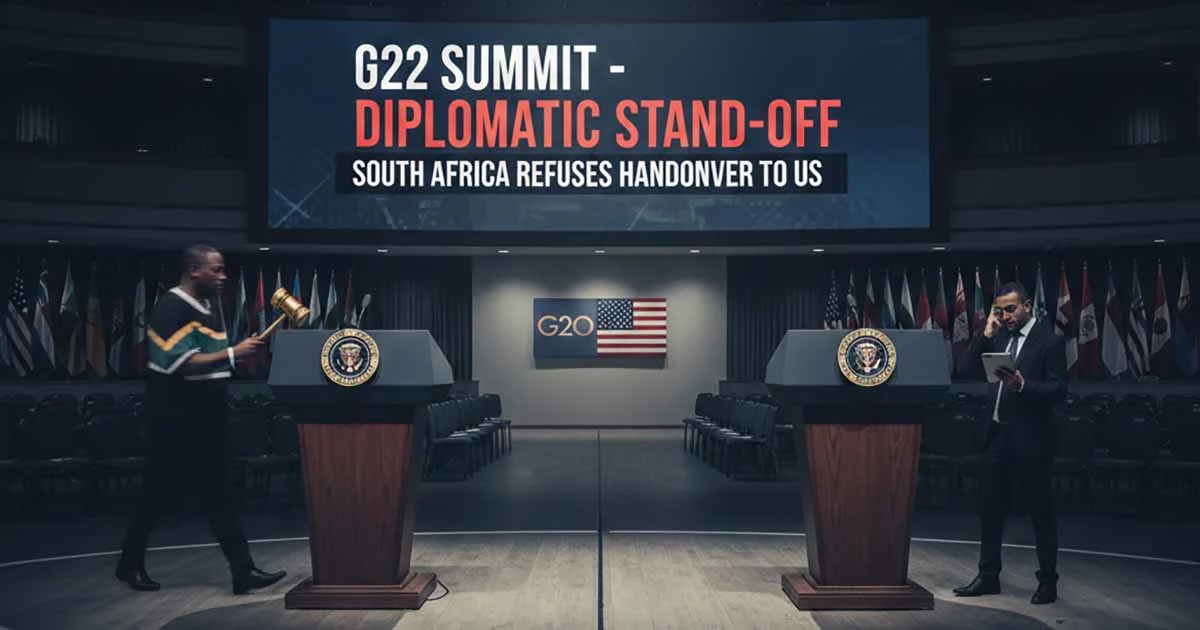
The tension between the US and South Africa at the most recent G20 summit has rapidly turned into one of the most talked-about topics in America. The tension was triggered after South Africa refused to hand over the G20 presidency to the United States, creating a rare public diplomatic conflict.
Why did the Rift start?
The problem was raised after the United States sent only an official from the embassy instead of an official from the top of the government. South Africa viewed this as not enough participation in an important global occasion. Due to this, they refused to participate in the traditional ceremony of handover, which triggered news stories and triggered a wider debate about diplomatic etiquette.
What Does This Mean for U.S. Global Influence
Experts have said that the incident demonstrates the diminishing U.S. visibility in major international summits. The South Africa-US rift is also a sign of increasing expectations of a stronger U.S. leadership, especially in times of economic or geopolitical uncertainty.
Many analysts think that the U.S. may need to review its approach to global gatherings to avoid similar diplomatic pitfalls in the near future.
What’s the reason it’s trending?
The story was a hit due to the fact that it is a reflection of more profound global changes. The G20 is an important factor in shaping international policies, and any conflict in it is a subject of intense attention.
As discussions continue in the aftermath, the South Africa-US rift continues to be a topic of discussion on news media and social media platforms, and many are watching to observe how they react. The United States responds.